
Of sacrament(s)
Baby steps towards a phenomenology of ordinances
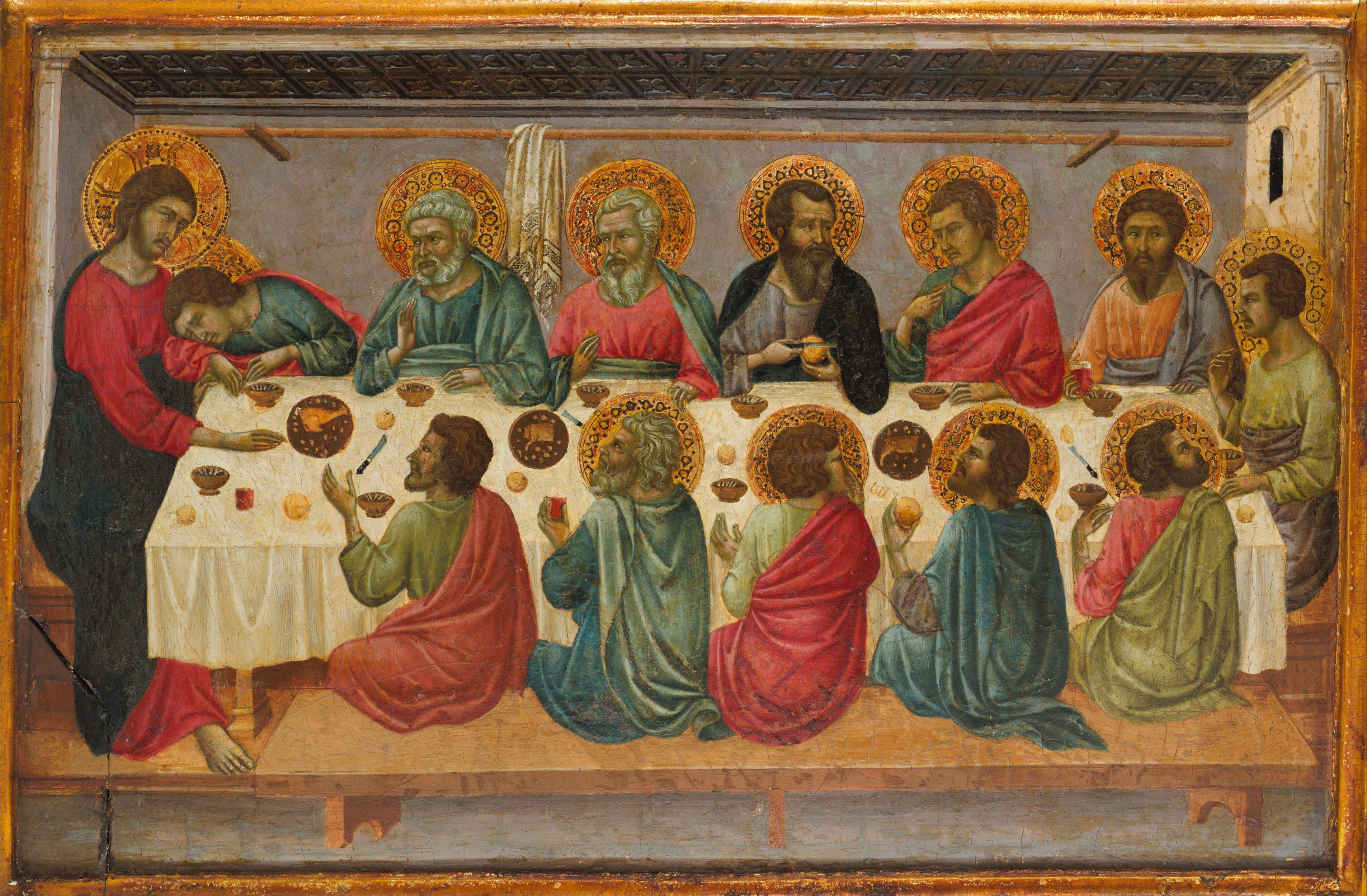
As I was reflecting on my week during the Sacrament last Sunday I realized I’d had a pretty good one. I was grateful for the little miracles I’d experienced, for friends and family and for the opportunity to be at church. The weight of my mistakes sat lightly on my shoulders, and for the most part I felt spiritually well.
I’ve gotten used enough to spiritual pain over the last few years that this feeling was both welcome and unfamiliar. It’s good to feel (mostly) right with God and (boundedly) satisfied with yourself, but it also got me thinking: what does being a disciple mean when you’re not actively struggling? In the past I’d mentally dilute moments like these by telling myself that new trials and difficulties were lurking around the corner, but this doesn’t feel like a very Christ-centered approach. If our theology tells us we’re supposed to have joy (more on that soon), we might as well practice it when we can.
This change in my circumstances made me reconsider the Sacrament. In good times I usually forget it exists until just before it is blessed and passed; in bad times I’m usually too listless and upset to fully engage. Either way I miss out on what the ordinance is supposed to be.
But what is it supposed to be? Sometimes I think we’re so anxious to feel warm and fuzzy during important LDS rituals that we try to manufacture those feelings with pre-registered mental images, familiar ideas or comforting platitudes. This has never really worked for me: our ordinances are either too familiar (the Sacrament) or too abstract (the temple). In general I’m also uncomfortable with the tendency to induce or force these feelings. Yielding to this instinct assumes we already know what the ordinances are about; after all, how can we tell ourselves what and how to feel if we don’t know what those feelings are meant to tell us? Said another way, how can I teach myself to feel the genuine power of these ordinances without smothering the (very real) process of getting there?
The implicit promise of the Sacrament is that in some inexplicable way, eating a crust of bread and drinking a thimbleful of water will orient our lives toward Jesus Christ. While we might not believe the bread and water to be the literal body of Christ, our theology holds that taking the sacrament renews our baptismal covenants to become like the Savior. It’s like being born again, again. If only we could feel that way more consistently.
You might feel that I’m making mountains out of molehills. For you it might be sufficient simply to assume that the Sacrament somehow does what it says on the label and not think about it any further. If this works, great! I’m happy for you, and a little jealous. But I want to model the phenomenology – the subjective experience – of the ordinance.1 If I can construct a sense of what I might feel as I participate and how I could expect those feelings to grow and develop over time, I’d be a lot closer to making these moments sacred for myself and those around me.
The Sacrament seems to be about woundedness. There’s some expiation or healing that’s supposed to take place. In the past part of my problem with it has been that the sort of healing I imagine is always the wrong size for what I’m experiencing. If I’m in serious pain, I need enough healing and grace that it’s hard to see how a crust of bread and a sip of water can make a difference. If on the other hand I come to church after a week of seemingly only minor sins and inconveniences, I’m apt to write the whole thing off as mindless repetition. I don’t feel particularly edified either way.
While people have many different experiences, I want to briefly address these extremes. In particular, I’d like to consider how the Sacrament heals serious woundedness. I’m reminded of the brazen serpent Moses and Aaron are said to have made in the wilderness when the children of Israel were set upon by poisonous snakes. The afflicted people were promised that if they looked at the metal snake then they’d be healed. Book of Mormon writers comment on this story several times, each time expressing disbelief that some people simply refused to look. In these writers’ telling, the especially proud people stayed resolutely in their tents, not believing that looking at a snake on a stick would help them very much.2
When we discuss the scriptures as we usually do in Sunday School (that is, with the curiosity and awareness of anesthetized dairy cattle),3 we nod through passages like these, casually taking the obvious lessons without taking them seriously. Yeah, the people could’ve looked at the snake. Yeah, a lot of them didn’t and died of their wounds. It’s really stupid that they didn’t look at the snake, if I’d been there I’d totally have looked. Why not, if you’ve got nothing to lose?
But we’re making a crucial assumption when we equate “getting healed” with “getting healed immediately.” We imagine that dying people hobbled out of their tents to look at the snake one minute and the next were joyfully leaping in the air while their less-faithful neighbors stubbornly averted their eyes. But suppose instead that the people who looked at the snake didn’t visibly improve. How would the picture change then? A few miserable, dying people use up some of the last of their strength to crawl out of their tents and look at a metal snake on a stick that’s somehow supposed to help them. They feel no better, hobble back inside, and spend days or weeks slowly recovering. Their neighbors, more exhausted than defiant, review the observable evidence from the still-sickly snake-lookers and decided that it just isn’t worth the effort. Given that fact pattern, can we blame them?
Not to be trite (I promise I didn’t plan this in advance), but don’t we in a sense have a weekly opportunity to look at a snake? To crawl out of our beds and drive or walk or ride to a meetinghouse and eat a crust of bread that’s supposed to make us spiritually whole? To put a brave face on sometimes-gaping spiritual wounds and spend a few hours in a place where the people around us sometimes thoughtlessly enlarge them? What could possibly be the point in this? But we’re promised that if we keep doing this utterly bizarre and irrational thing, we’ll be healed. The precise way this happens is something of a mystery, but acknowledging the mystery is precisely what opens the door to spiritually meaningful Sacrament experiences.
Embracing the mystery of the Sacrament won’t necessarily help us see angels (though I’m not ruling it out). However, recognizing the place where our spheres of concern end and divine intervention begins lends a greater sense of self-awareness and placed-ness in the presence of God. It frees us of the personal need to somehow make the Sacrament meaningful and rather gives it permission to fill our natural desire for transcendence. If we like, we might imagine the ordinance infiltrating our minds and hearts, searching for wounds to heal and broken things to mend. We might think about our neighbors who come to the meetinghouse bearing greater burdens than we; we might find ourselves developing unbidden the courage and awareness to help carry them. Anxiety and inadequacy die the moment we stop mentally running through our spiritual scorecards and instead consider the needs of Christ’s Body. Maybe this renewed courage and selflessness is the real miracle we seek.
In my subtitle I set out to explore the phenomenology of ordinances, to develop a model of how we can approach these sacred experiences with greater awareness and satisfaction. I’m leaving us now with the precursors to such a model, although I won’t belabor the point just yet by hammering them into something. If nothing else I want to leave off with the idea that there’s some sort of line in our lives past which our personal habits or practices cannot make us holier. At that point, time, patience and grace must step in to accomplish what all our desiring and striving cannot. It may be that ordinances mediate this liminal space, opening up the world in our minds where human soul ends and Spirit – real, honest-to-goodness, genuine Spirit – begins. Our spiritual lives can change in profound ways as we identify this space, experience it more deeply, and find room in our spiritual practices for the delicate tradeoff between authenticity and transcendence.
Phenomenology is a bit broader than this, but it’ll do for now.
Honestly a reasonable position, if you think about it.
With apologies to dairy cows, who do yeomen’s work keeping us all appropriately plied with milk.